From Stella to the Abbey of Rodengo Saiano: the stage's story.
Franciacortino passa da qui!
Summary
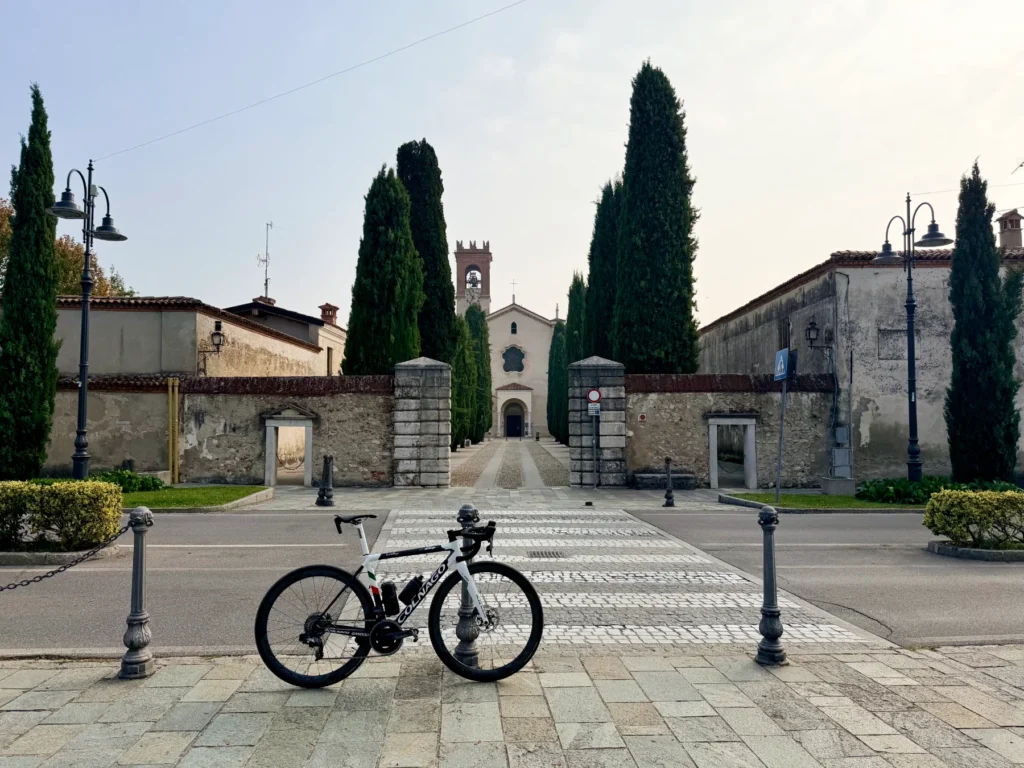
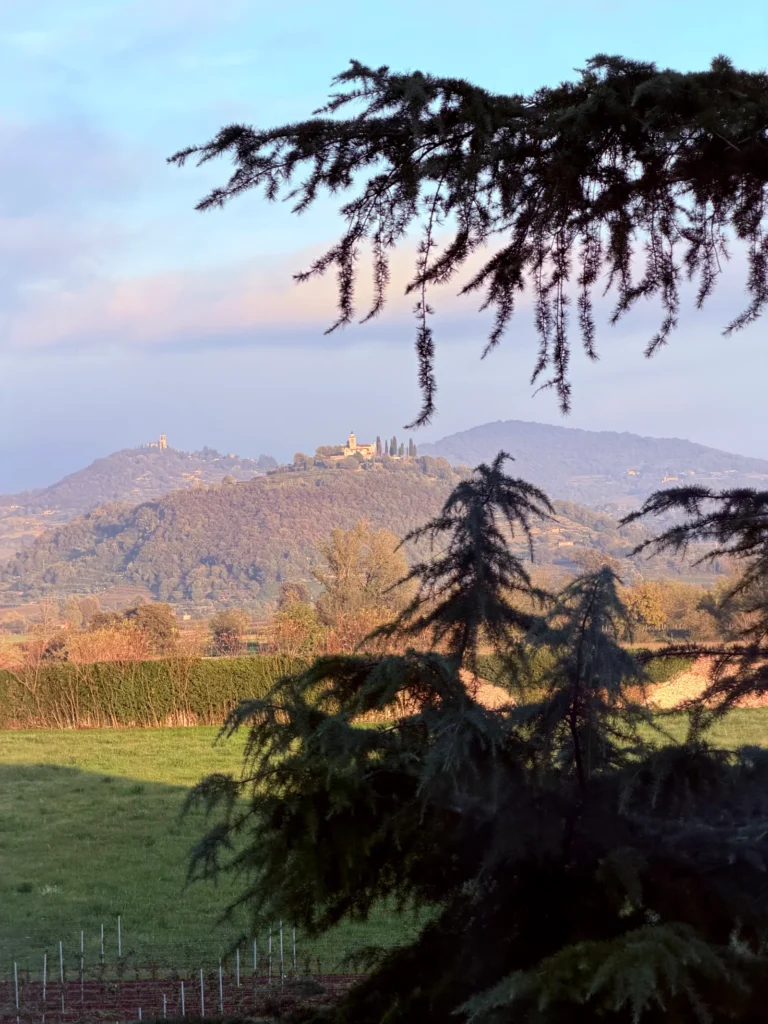
After a challenging climb, a regenerating descent always follows. The sixth section of the cycling route in the heart of Franciacorta does not escape this “rule”. From the Sanctuary of Madonna della Stella, you reach the Olivetan Abbey of San Nicola, in Rodengo Saiano, a jewel of history, art, and spirituality.
Founded by the Cluniac monks in the 11th century, the abbey passed to the Olivetans in 1446, who began its reconstruction. After the Napoleonic suppression of 1797 and over a century of decline, the monks returned in 1969, beginning the recovery of the complex, which is still today home to a monastic community and a place of prayer, hospitality, and culture.
The card:
From the Sanctuary to the Abbey
The sixth section of the itinerary passes through Cellatica, Gussago, and Rodengo Saiano, extending for about 7.5 km downhill from the Sanctuary of Madonna della Stella. The first kilometer after the place of worship requires careful driving, with hands ready to use the brakes. The descent begins winding along Via Stella, then becomes more linear on Via Forcella towards the center of Gussago; after this, continue towards Ronco, a hamlet known for its cycling tradition celebrated by “Il Giro”, the sculpture that welcomes visitors from the roundabout at the entrance of the village. To reach the destination of this stage, continue straight through Padergnone, a hamlet of Rodengo Saiano known since 1142, and pass three roundabouts: at the first, turn left onto Via Brescia, while the other two must be passed by maintaining direction until the Abbey, which is on the left side of the road.
Tap the map to activate it
Where history meets spirituality
In the heart of Franciacorta, in Rodengo Saiano, stands theOlivetan Abbey of San Nicola, one of Lombardy’s most historically and artistically important monastic complexes. The origins of the site are even older than the monastery itself: the area was already traversed by communication routes in Roman times, when road junctions were strategic points for travel and trade. However, it was in the 11th century that the Benedictine monks of the Cluniac congregation founded a monastery here, destined to become a religious and economic reference point for the territory.
La storia dell’abbazia attraversa secoli di trasformazioni. Nel 1446, per volontà di papa Eugenio IV, il complesso venne affidato ai monaci olivetani, che avviarono un importante progetto di ricostruzione e ampliamento. Tra il Quattrocento e il Settecento, gli edifici si arricchirono progressivamente di chiostri e ambienti conventuali, dando vita a un insieme architettonico di straordinario valore. Il monastero fu soppresso nel 1797 durante l’epoca napoleonica e conobbe un lungo periodo di declino, fino al ritorno dei monaci olivetani nel 1969, quando ebbe inizio una nuova stagione di recupero e valorizzazione.
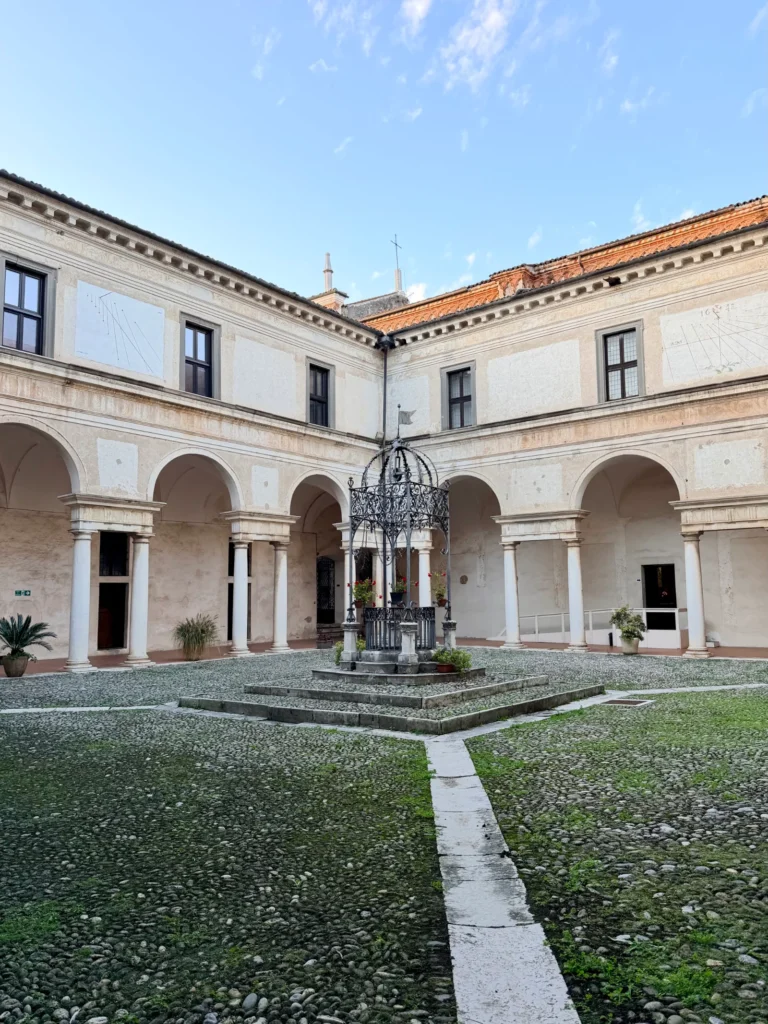
Beyond its history, the abbey preserves an artistic heritage of considerable value. The halls and cloisters house works by prominent Brescian masters, such as Romanino, Moretto, and Lattanzio Gambara. Among the most evocative spaces are the Great Cloister, with its Renaissance portico, and the Cistern Cloister, enriched by an ancient well and 17th-century sundials. Of particular interest is Lattanzio Gambara's fresco cycle on the Visions of the Apocalypse, created in the sixteenth century in the ante-refectory and the refectory.
Today, the Olivetan Abbey of San Nicola still hosts a monastic community, which protects its spiritual vocation and keeps its tradition alive. It is a place where art, history, and contemplation intertwine, offering those who travel through Franciacorta an opportunity for a stop that goes beyond the simple discovery of the landscape. In this stage of our journey, the ride transforms into an introspective reflection on how beauty and historical memory can restore a more human and profound rhythm to our journey.
Sources and bibliographic references:
Historical documentation and updates available on the official website: Rodengo Abbey
Chronological reference on Padergnone: Brescian Encyclopedia
Founder of Franciacortino
I explore Franciacorta by bike, pedaling slowly through stories, roads, and details.