Tra torri e devozione:
Paderno Franciacorta nel grande giro della Franciacorta.
Franciacortino passa da qui!
Summary
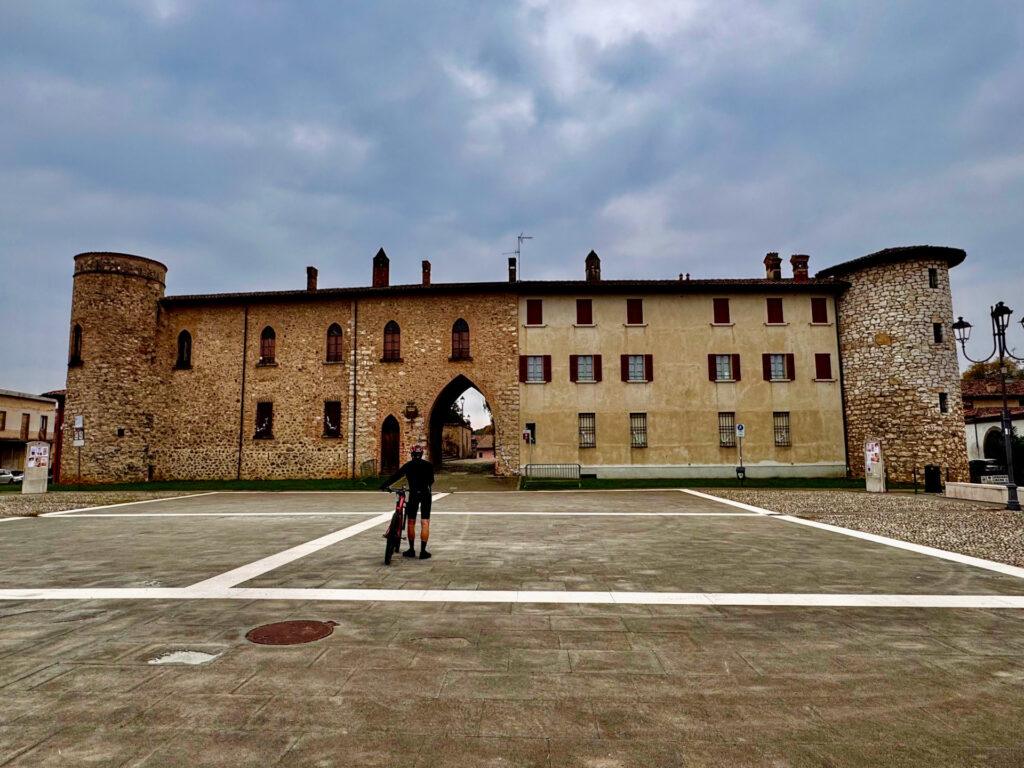
La terza tappa del Grande Giro della Franciacorta raggiunge Paderno Franciacorta e si ferma al Castello Oldofredi. La fortificazione, citata già come ricetto nel 1009, nacque per difendersi dalle incursioni ungare. Nel tempo assunse funzioni militari e fu coinvolta nei conflitti tra Visconti, Guelfi e Ghibellini, fino al sacco di Brescia del 1512. I restauri ottocenteschi ne hanno mutato l’aspetto originario: oggi restano la facciata principale con due torri cilindriche e l’ingresso gotico. L’ala sinistra ospita la biblioteca e la sala civica, quella destra abitazioni private.
The card:
From San Giacomo Maggiore in Ospitaletto to the Odofredi Castle in Paderno Franciacorta.
Leaving the façade of the church of San Giacomo Maggiore behind us, we turn left three times: first onto Via Brescia, until we reach the intersection with Via Vittorio Veneto; secondly onto the latter; and finally, after less than a hundred meters, left again onto Via Franciacorta.
Following the entire road, we reach the intersection that leads back to Via Monsignor Rizzi. Here, we turn right, retracing the path we took when entering the village. A little further on, we ignore the turnoff for Via Vallosa and continue straight along Via Sant'Antonio, a quiet road that passes through the vineyards and leads towards Paderno Franciacorta.
At the entrance to the village, you can see the bell tower of the Church of San Pancrazio. At the roundabout, take the first exit on the right and, after about fifty meters, turn left onto Via Mazzini. The road passes through the center of Paderno Franciacorta, allowing you to admire the parish church and its large churchyard (on the left), the town hall (on the right), and finally reaches Piazza della Libertà, opposite Oldofredi Castle.
Tap the map to activate it
The origins of Oldofredi Castle in Paderno Franciacorta likely date back to the first half of the 10th century, when local populations sought refuge from barbarian incursions. It stands on a slight rise overlooking the surrounding plain, an ideal position for defense and territorial control.
First mentioned in the 13th century, the castle belonged to the Oldofredi, an ancient and powerful Brescian family of Ghibelline allegiance. In 1242, it welcomed King Enzo of Sardinia, son of Emperor Frederick II, who sought temporary refuge there during the conflicts between the imperial and Guelph armies. Over the following centuries, the fortress was involved in numerous battles and armies' passage: in 1326, it suffered severe devastation at the hands of Azzone Visconti's troops, engaged in the wars against the Guelphs of Brescia.
Despite destruction and political changes, the castle maintained an important role in the life of the village. Over time, it lost its military function and was transformed into a noble residence, becoming a silent witness to Paderno's history and identity.
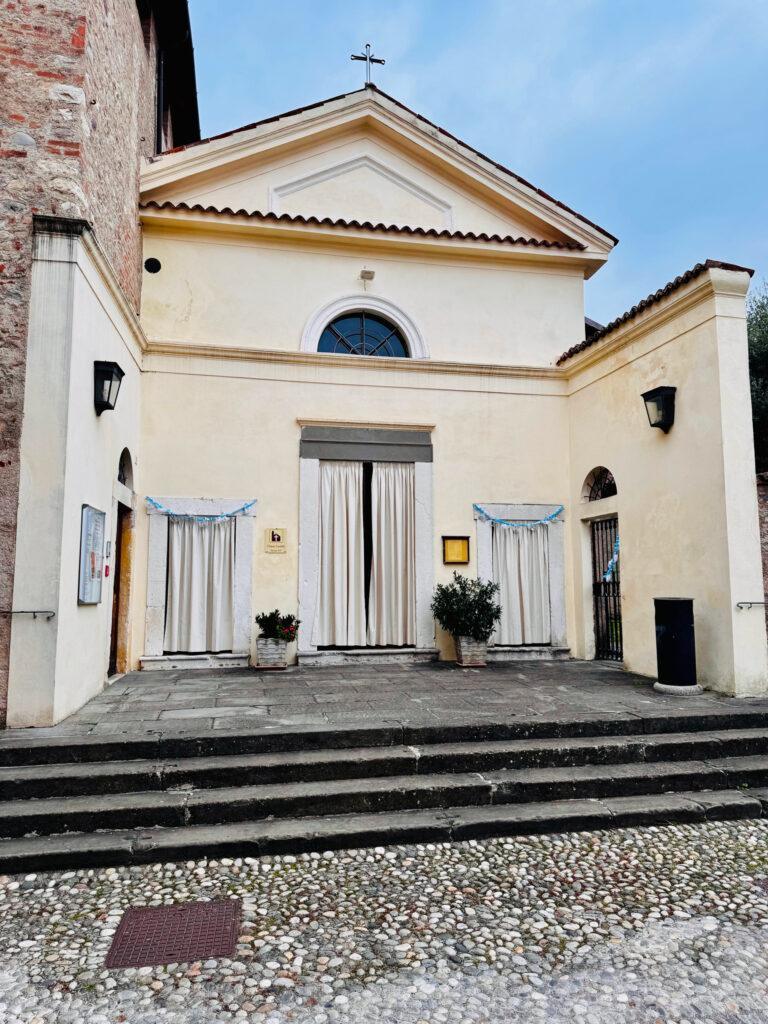
All’interno del complesso sorge la Chiesetta della Madonna del Castello, piccolo santuario che custodisce un’immagine mariana venerata dagli abitanti. La tradizione racconta che la Vergine abbia protetto il paese nei momenti più difficili, e ancora oggi la comunità si raccoglie qui in preghiera durante le principali ricorrenze religiose.
Today, Oldofredi Castle, though modified and partially renovated over the centuries, remains one of Paderno Franciacorta's most evocative symbols: a living reminder of its medieval past and the deep devotion that binds the population to their land.
Founder of Franciacortino
I explore Franciacorta by bike, pedaling slowly through stories, roads, and details.