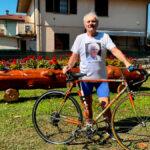
Linda Peli from Gussago – The bicycle as freedom, inclusion, and movement.
Volti Franciacortini
The encounter.
Alzi la mano chi, tra voi utenti social, non ha almeno un contatto che non ha mai incontrato di persona e di cui non ricorda neppure l’occasione della conoscenza reciproca.
Ecco, fino a poco tempo fa, Linda Peli era per me uno di questi contatti. Sapevo però della sua passione per la bicicletta e della sua abitudine a usarla per andare al lavoro. Così ho deciso di contattarla, curioso di conoscere le esperienze e i punti di vista di chi pedala ogni giorno per gli spostamenti quotidiani.
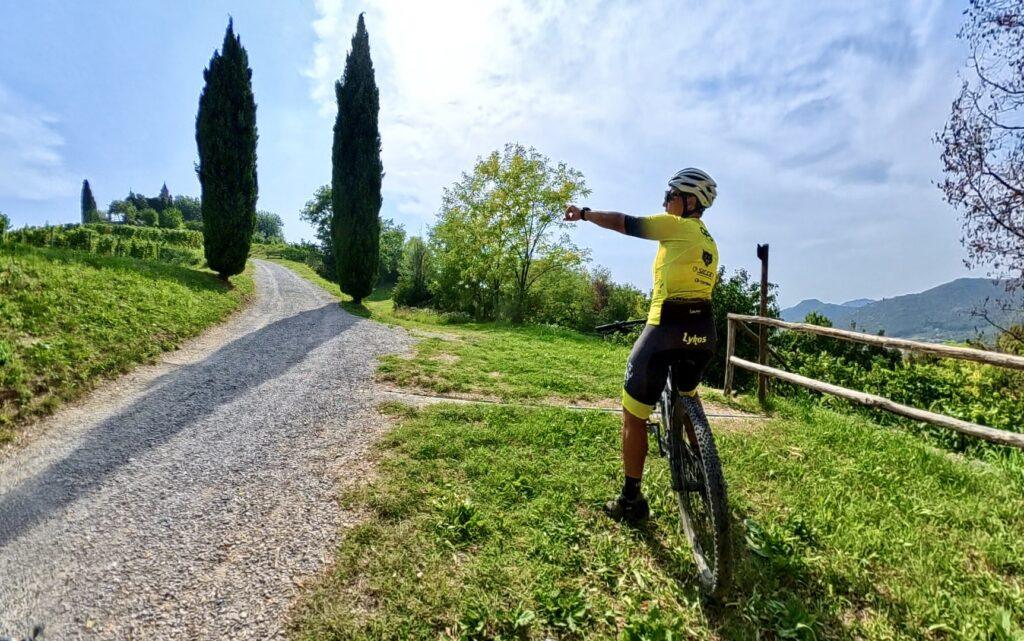
Da questo incontro ho ricevuto molto più di quanto mi aspettassi: Linda mi ha accolto nella sua Gussago e mi ha accompagnato in bici fino alla Santissima, un luogo meraviglioso dove, incredibilmente, non ero mai passato. Un posto speciale di cui sono certo vi parlerò ancora nei prossimi mesi.
The tour to the Santissima with Linda.
Il ritrovo è fissato alle 15:30 in piazza a Gussago. Linda arriva sorridente, in sella alla sua e-bike. Ha scelto la pedalata assistita a causa di una caviglia dolorante, a seguito di un recente infortunio, ma non vuole mancare all’impegno preso. Dopo le presentazioni, mi mostra la mappa esposta ai piedi di via Santissima: il nostro percorso prevede un giro attorno alla collina, la salita fino all’ex convento per ammirarlo da vicino e infine una discesa su un divertente single track.
Arrivati in cima, Linda mi confida di essere molto legata alla Santissima anche perché suo padre, muratore in pensione, ha contribuito con il suo lavoro da volontario alla sua ristrutturazione, occupandosi in prima persona dei muretti a secco. Dopo esserci fermati, le propongo due chiacchiere sulla sua passione per la bicicletta. Ci sediamo sul prato, all’ombra di un albero, e lei, con un po’ di esitazione, mi chiede: “Ma sei proprio sicuro di voler intervistare me?”. Eppure, da quella conversazione emergono spunti preziosi che cercherò di raccontarvi al meglio.
Meeting date: Wednesday, August 13, 2025
From the start, Linda told me that the themes closest to her heart are cycling, accessibility, and the practice of “bike to work.” These threads became clearer as she spoke, interwoven with her professional background: she is an expert in human movement, dedicated to promoting people’s physical and mental well-being.
I'm a kinesiologist specializing in clinical practice. I work in hospitals and community settings. Most of my time is spent in hospital research, specifically in pediatric oncology. I study the effects of exercise during children's chemotherapy treatments. My life is dedicated to helping others understand the importance of movement, not as a performance, competition, or a contest, but simply for physical health, because we were born to move.
His words reveal a deep passion for his profession, which combines science, movement, and human relationships.
"It's a wonderful field, which I wanted to bring to the local community through an association that offers adapted physical activity for people with various medical conditions, targeting both adults and children."
L’associazione si chiama MOV e ha sede a Gussago. Linda, che la presiede, me ne racconta le attività, soffermandosi su quella che del tutto correttamente ritiene più significativa per Franciacortino:
“The other practice that might interest you more is a foundation of motor patterns for children with fragilities or disabilities. We teach children how to ride a bicycle.” […] “It may seem obvious, but when a child has additional difficulties, there is often no one to support parents and encourage the child to ride a bike.” […] “The bicycle itself is associated with a motor pattern that allows not only learning how to manage risk, but also gaining autonomy. Perhaps as an adult the child with difficulties will not be able to drive a car, but if they learn to pedal from a young age, thanks to the bicycle, they will still be able to be independent. It is also a matter of health, because cycling is an aerobic activity that strengthens the lower limbs. Balance, cross motor patterns—there are many dynamics involved in the act of pedaling.”
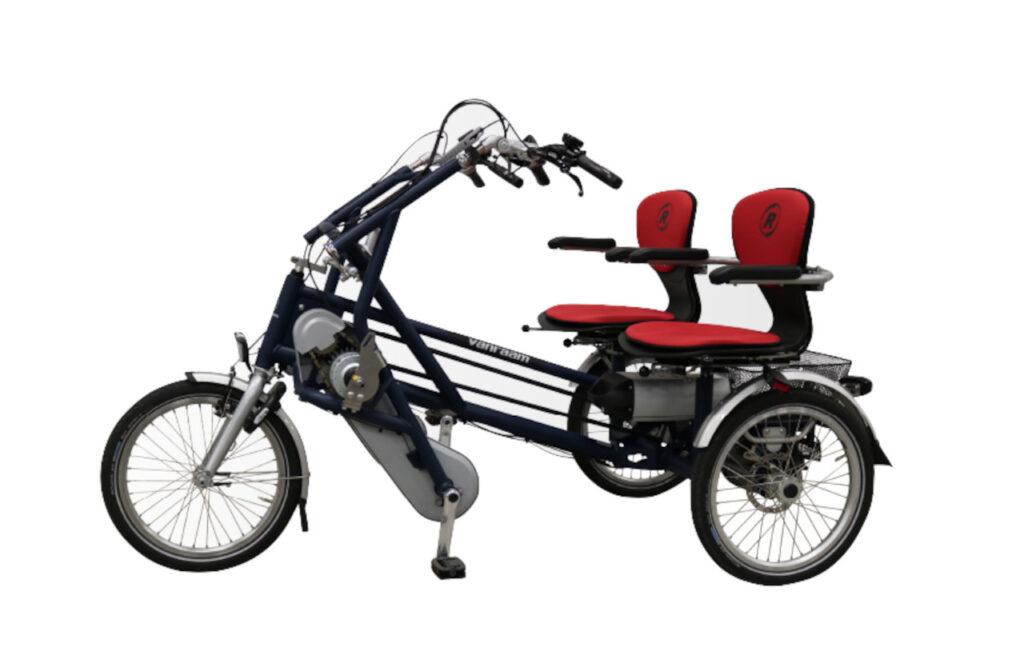
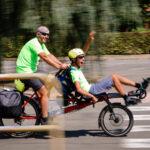
Nel 2021 l’associazione Facciamo Centro in collaborazione con MOV e Pedalabile, ha promosso una raccolta fondi che ha permesso l’acquisto di un tandem affiancato elettrico Fun2go. Questo speciale mezzo consente di vivere una pedalata inclusiva. È a disposizione di tutti, gratuitamente, previa prenotazione presso il centro sportivo Corcione di Gussago.
Proseguendo il racconto, Linda mi spiega che dal 2020 utilizza la bicicletta per i suoi spostamenti quotidiani. La scelta è nata quando il Comune di Gussago ha avviato un programma di incentivi per promuovere l’acquisto e l’uso delle due ruote come mezzo sostenibile.
In addition to supporting the purchase, the Municipality wanted to prevent bicycles from gathering dust in garages. Therefore, it introduced a mileage reimbursement: 25 cents for every kilometer traveled by bike to work or school, up to a maximum of 50 euros per month. The initiative was made possible by allocating part of the funds to an agreement with a digital platform, which allows citizens to record and certify the kilometers traveled.
Linda, enthusiastic about this project, which has been active for five years now, says the platform has proven to be a valuable resource for freelancers like her, who travel to different locations.
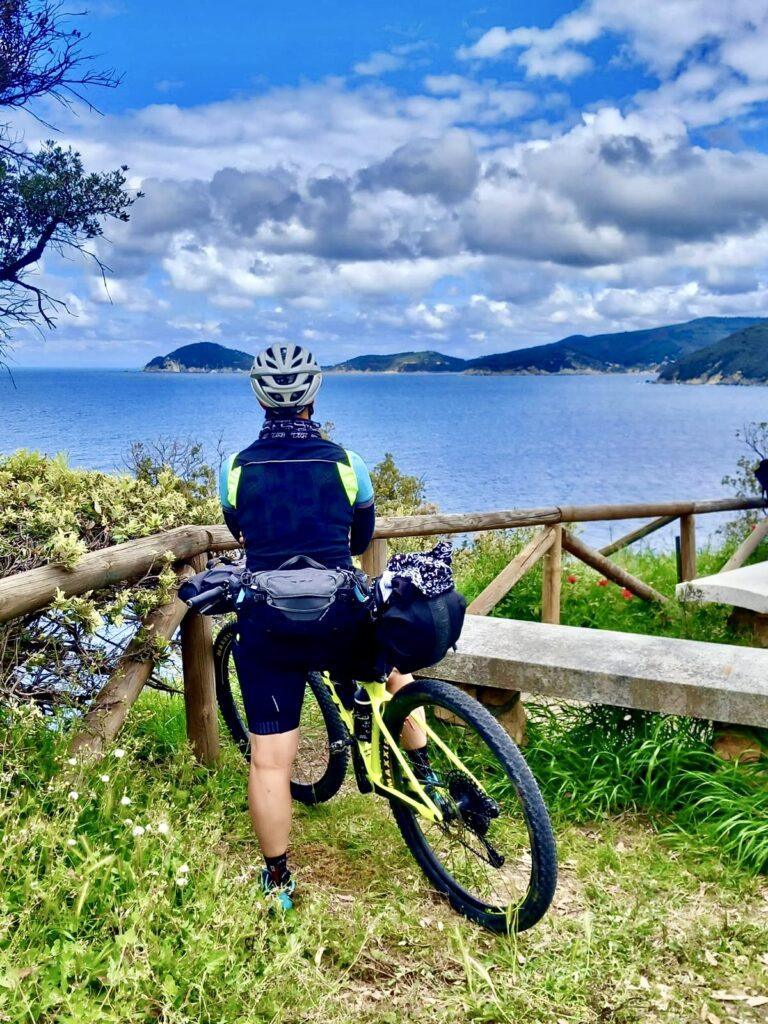
“Occhi gambe e pensiero libero”
The information I've gathered is already valuable, but my curiosity pushes me to investigate the origins of his passion for cycling. The answer surprises and amuses me.
My passion was born in May 2012. I'm an Alpine soldier, and that day I was on the train from Merano to Bolzano, heading to the national gathering. At a certain point, I said to my companions, "Next year we'll go to Piacenza by bike." They agreed, and I don't like to turn them down. At the time, I wasn't cycling: I only did a few races, but from then on I started training to keep my promise. Since then, I've cycled to the gathering every year.
He smiles as he remembers his first outing:
From Gussago I reached Iseo, along the Brescia-Paratico highway: 17 kilometers that seemed like a feat to me. Even today, it's the road I hold dear, the one I choose when I feel the need to unwind and clear my mind.
Over time, Linda also tried a few granfondos and other competitions, but she realized that the competitive aspect wasn't her thing. For her, cycling is above all synonymous with freedom:
"Bike travel is my ideal vacation."
Every year he takes at least two or three trips on horseback.
This year I traveled to Friuli, crossing it from east to west. I usually reach my desired destination and then explore it by bike; depending on how much time I have, I decide whether to cycle home or take the train. For me, this is what a vacation is: leaving home by bike, traveling light, and feeling free.
Drawing on her experience, I asked her opinion on bike lanes. Her answer was clear and direct:
There are two aspects I'd like to see improved. The first is accessibility: often, those who design trails have never actually ridden them. It makes a big difference whether you ride them on a racing bike, a mountain bike, or a wheelchair. The second is cultural: on the roads, education and mutual respect are essential. We could look to Northern Europe, where every road user has their own space and the rules are respected.
Meeting Linda leaves me with much more than just a simple ride. It restores my vision of the bicycle as a tool for health, inclusion, and community: not just a means of transportation, but also an opportunity to rediscover the local area, forge connections, and remind ourselves that movement is an essential part of life. Her story is an invitation to rethink our cities and our times: less static, more in motion, more attentive to others. In a word, more human.
Claudio Pelucco
Founder of Franciacortino
I explore Franciacorta by bike, pedaling slowly through stories, roads, and details.